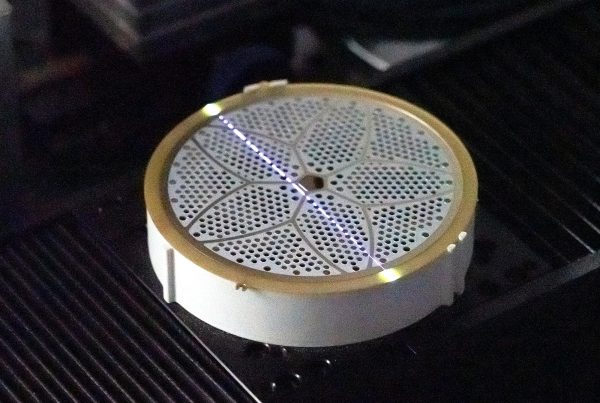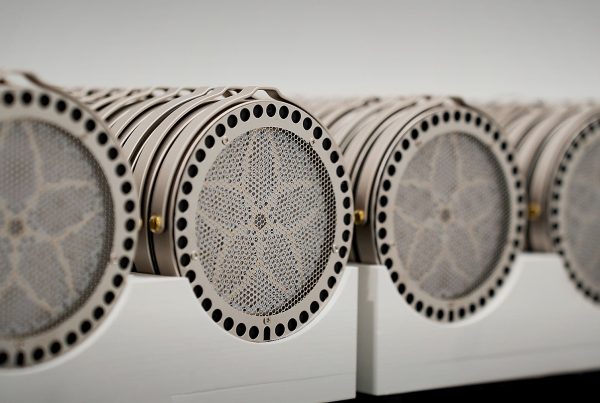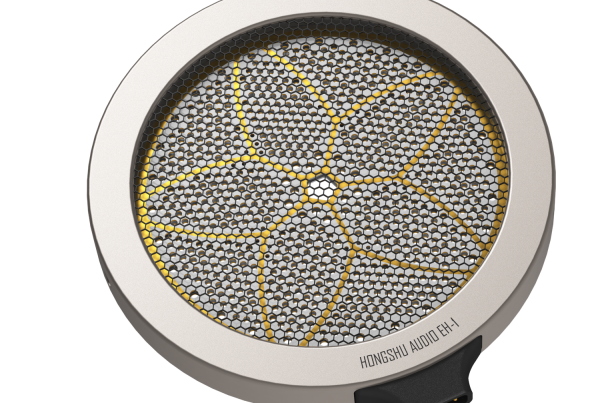


Many listeners first meet electrostatic headphones as a reputation. They have heard that the sound can be fast, open, and highly resolved. They may also have heard that the systems are expensive, delicate, or hard to match. Our EH-1 and EHA-1 system sits directly inside that tension. It is an electrostatic system, but it is also presented as a complete first step.
That is why the EH-1 has generated visible discussion across enthusiast spaces. Bilibili search results show V3 and V4 unboxings, comparisons with other headphones, amplifier pairing videos, and user recordings. Reddit and Head-Fi discussions place EH-1 in the wider conversation around Chinese headphone makers and entry-level electrostatic systems. Not all of that discussion is praise, and it should not be flattened into a marketing quote. The important point is simpler: people are listening, comparing, and asking where EH-1 fits.
Begin with a careful setup
The first session with EH-1 should start before the music. We recommend connecting the RCA source cable, 12 V DC input, and headphone cable first, then turning the volume fully counterclockwise before powering on. Confirm that the headphone cable is fully seated and that L/R markings are matched correctly. These steps are not formalities; they help protect the system and make the first listen calmer.
Once the system is ready, start with recordings you already understand. A headphone with a strong personality can impress quickly with unfamiliar music, but familiar tracks reveal the more useful things: whether a voice sits naturally, whether cymbals decay without splash, whether bass lines have shape rather than only quantity, and whether the stage remains coherent when the arrangement becomes dense.
Electrostatic headphones often make small information easier to follow. That can be the breath before a phrase, the skin tone of a snare, the room around a piano, or the way reverb separates from the dry signal. The goal is not to search for “more detail” as an abstract prize. The goal is to hear whether detail serves the music.

Use the light weight as part of the test
Public listings place the EH-1 at approximately 295 g without cable. That figure is one reason the model is easy to discuss as a long-session headphone. Still, comfort is personal. Head shape, pad fit, clamp, temperature, and cable routing all matter. A good audition should last long enough for the listener to stop thinking about the first five minutes and start noticing whether the headphone disappears physically.
Do not only play the impressive track. Play a full side of an album, a long live recording, or a complete movement. Electrostatic clarity can be exciting at first, but long-session listening asks a different question: does the system remain relaxed enough that you keep listening?
Understand what the EHA-1 controls are for
The EHA-1 amplifier gives the EH-1 system a defined starting point. We designed Bass Boost and physical left/right balance adjustment as practical controls. Before listening, set the BALANCED knob to its center mark. If the image remains slightly off-center during use, adjust it in small steps until the sound sits naturally. Start with Bass Boost off for a flatter response, then switch it on only when the recording or use case asks for extra low-frequency atmosphere, such as electronic music, film sound, or game audio.
Balance adjustment is even more practical. Real rooms, ears, pads, and recordings are not always perfectly symmetrical. A small physical balance control can help the image settle without changing the rest of the chain. That is a useful tool for a system designed to be lived with rather than only demonstrated. One source-chain point is important: the RCA input should receive a common-ground single-ended signal, and unsafe balanced-to-ground conversion should be avoided.
A first electrostatic session should not be a contest. It should be a way to learn speed, openness, decay, and how the system behaves when the novelty wears off.
Listen beyond the usual audiophile checklist
It is tempting to reduce any new headphone to bass, mids, treble, soundstage, and resolution. Those categories are helpful, but they only get you part of the way. With EH-1, also listen for how the system handles musical continuity. Does a singer feel connected to the band? Does the bass support the rhythm, even if it is not exaggerated? Does the treble reveal space without turning every recording into a demonstration?
The most useful external discussions around EH-1 are the ones that treat it as a real system with trade-offs. Some listeners compare it with more expensive electrostatic amplifiers. Others focus on the stock EHA-1 as an accessible starting point. Some discuss V4 improvements, unboxing, or long-term use. That range of discussion helps set a realistic expectation: EH-1 is not a replacement for every high-end electrostatic system. It is a serious way to begin hearing what electrostatic sound can do.

After the first hour
At the end of the session, the best question is not “did it win?” A better question is “what did it make easier to hear?” If the answer is room information, clean transients, vocal articulation, image separation, or a calmer sense of space, then the listener has started to understand the electrostatic format on its own terms.
That is where the EH-1 system is most useful. It gives the first session a clear shape: a lightweight open-back headphone, a dedicated amplifier, a standard electrostatic bias format, and enough public discussion around it that new listeners can compare notes. For a category that can feel mysterious from the outside, that is a meaningful beginning.
The final part of the first session is care. We recommend avoiding high-volume listening for long periods, use while driving, riding, walking, or crossing roads, use in wet or sweaty conditions, water ingress, disassembly, and rough cable handling. Store the product dry, shaded, and away from dust. Those habits are what let a precision electrostatic system remain a long-term listening tool.