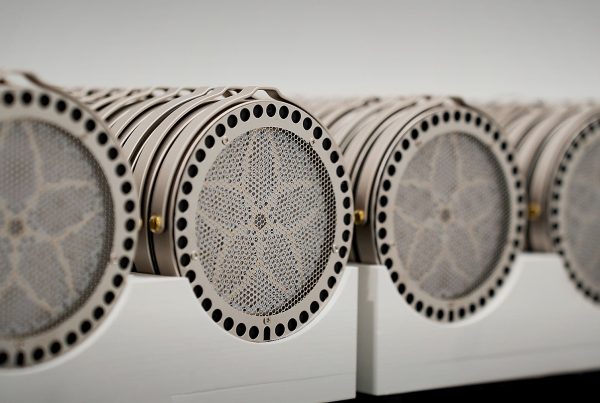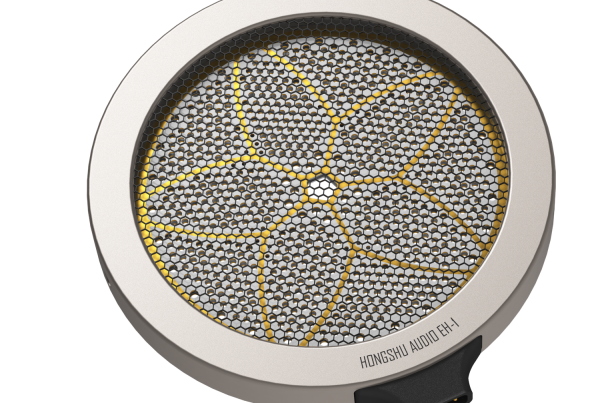

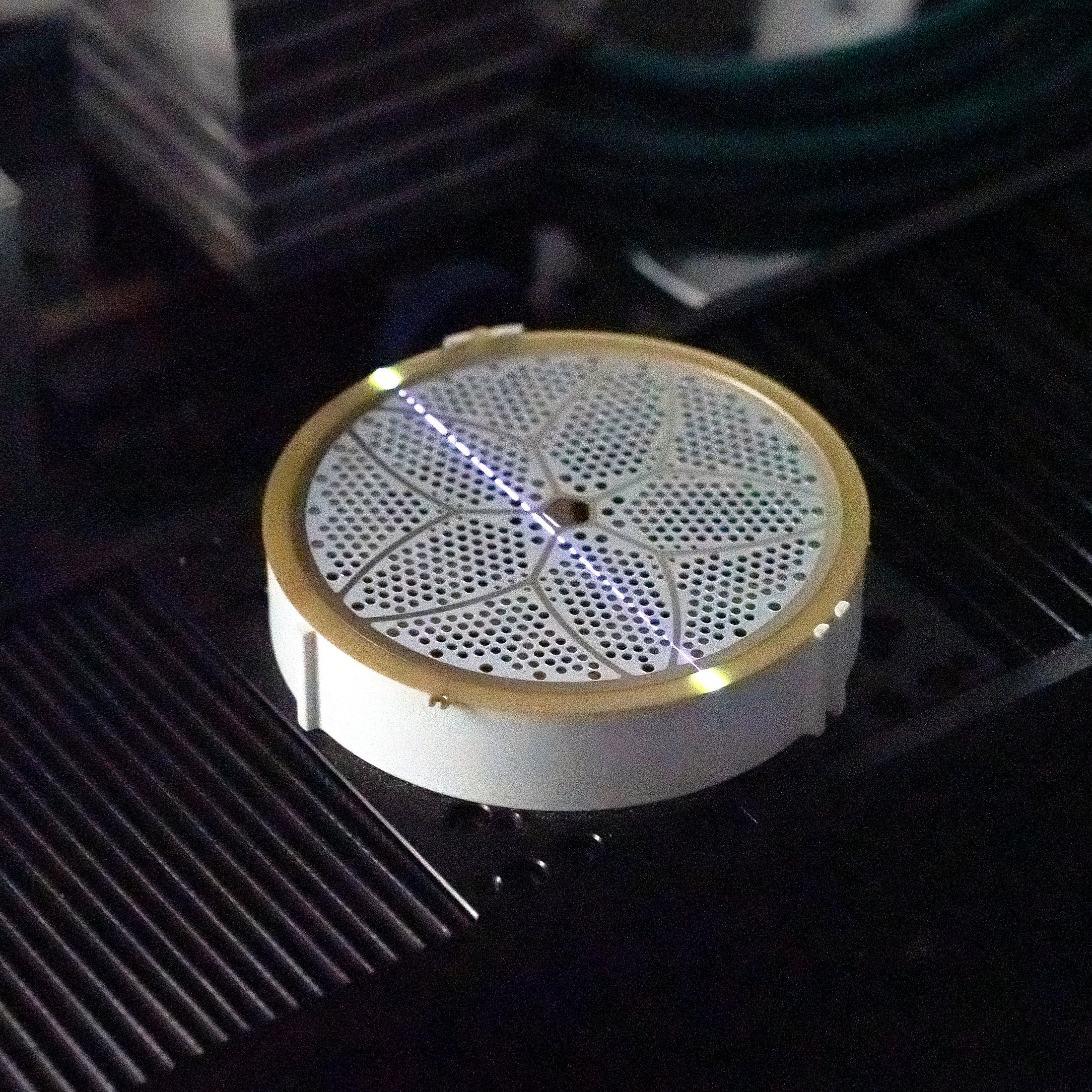
Electrostatic headphone design is often discussed through sound words: speed, air, detail, transparency. Those words are useful, but they are the final layer. Before a listener hears any of that, the headphone has to solve a quieter problem: the physical relationship between diaphragm and stator.
In an electrostatic driver, the diaphragm moves inside an electric field created by the stators. If the geometry is inconsistent, the field is less uniform. If the stator is not flat enough, the diaphragm’s working conditions become less predictable. These small manufacturing details are exactly what separate an idea from a repeatable product.
Measuring what the ear eventually hears
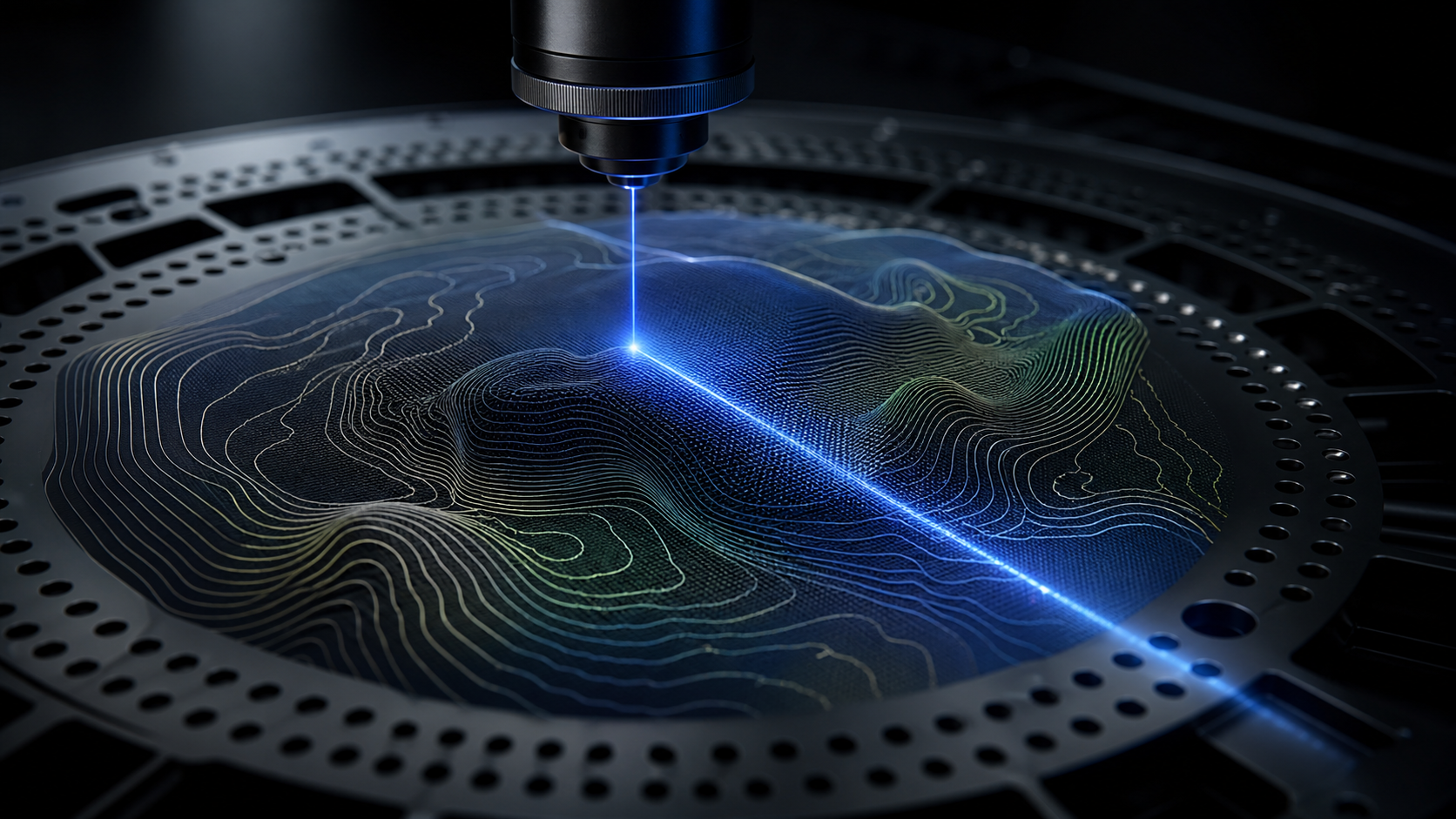
We use LiDAR surface mapping with 0.1 um scan precision to measure electrostatic headphone stator plates. The stated goal is to identify tiny warping and local surface variation, then control key-area flatness to the 10 um range.
The numbers should be read as process language, not decoration. A 0.1 um scanning precision claim indicates that the inspection method is meant to see much smaller variation than the final controlled range. A 10 um flatness target speaks to the manufacturing condition we want before a stator becomes part of the acoustic system.
Why stator flatness matters
The stator is part of the motor structure of the electrostatic driver. Rather than moving like a conventional cone, it helps create the electric field that acts on the charged diaphragm. Geometry therefore becomes part of the signal path in a physical sense. A more consistent stator surface supports a more consistent field, and a more consistent field gives the diaphragm a more predictable environment in which to move.
We connect this process to lower distortion, better channel consistency, and a cleaner, more precise sound. Those are serious claims, and they should be supported over time by measurement, production records, and listening feedback. The immediate point is narrower and more useful: LiDAR mapping shows that we treat stator flatness as a controlled production variable, not as an invisible assumption.
The same philosophy continues into everyday handling. We ask users to avoid sharp contact with the driver, wet hair, heavy sweat, rough handling, and sudden air-pressure shock to the diaphragm. These are practical habits, but they point to the same reality: an electrostatic diaphragm and stator assembly depends on controlled spacing, clean surfaces, and careful physical handling.
The most important manufacturing work in an electrostatic headphone may be the part that never appears in a glamour photo: keeping the stator geometry predictable.
From inspection to feedback loop
A single scan is only a snapshot. The real value comes when scanning becomes part of a loop. If height data shows where a stator changes shape, the team can adjust machining, fixing, assembly, or handling. Over time, the measurement becomes a way to improve the process rather than merely reject parts at the end.
This is where LiDAR belongs inside our broader work. We build electrostatic audio from the driver up. A surface mapping process supports that claim because it lives at the driver level, before the headphone becomes an object a listener can wear.
A useful detail for serious listeners
Most listeners do not buy a headphone because it uses a specific inspection tool. They buy it because it helps music feel more convincing. But high-end audio buyers often want to know whether the manufacturer understands the connection between process and sound. LiDAR surface mapping gives us a concrete way to discuss that connection.
It says we are paying attention to the physical conditions that allow an electrostatic diaphragm to behave consistently. EH-1 is intended for defined operating conditions: 5-40 C, 10%-80% RH without condensation, 0-3000 m altitude, 11-15 V DC supply for the EHA-1, and 550-600 V bias range for the EH-1. Those limits give reviewers and technically minded listeners a better question to ask during an audition: not just “is the sound detailed?”, but “does the product feel controlled, consistent, and stable across the music I know?”